Your Brain Is Shopping for Feelings — And Your Wallet Is Paying the Price
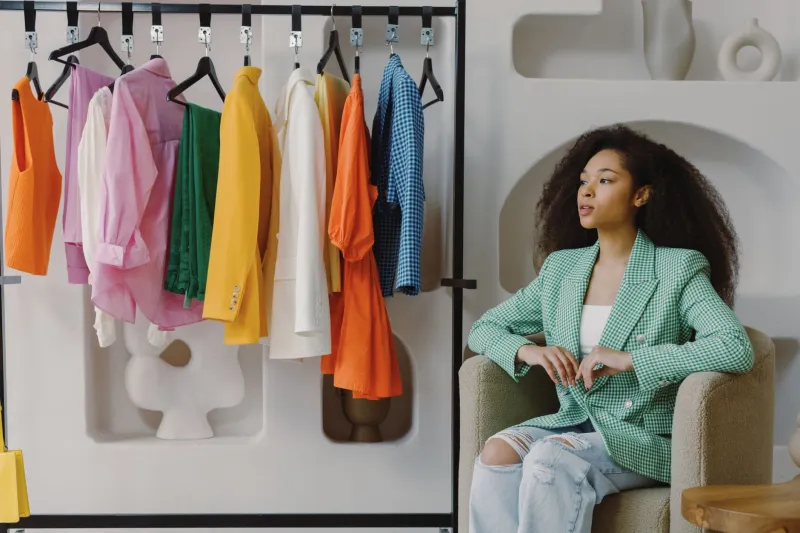
Let's be honest: at some point in the last few years, you bought something bright, bold, or just a little extra — not because you needed it, but because you needed it. A lemon-yellow blazer. A pair of dopamine-pink sneakers. That cobalt blue dress that felt like a whole personality shift on the hanger. You brought it home, wore it once maybe twice, and then waited for your life to feel different.
It didn't, did it?
Welcome to the dopamine dressing trap — and don't worry, you are absolutely not alone in it.
What Dopamine Dressing Actually Is (vs. What We Were Sold)
The term "dopamine dressing" blew up during the pandemic, when fashion psychologists and style influencers started promoting the idea that wearing bright, joyful colors could chemically boost your mood. And here's the thing — there's some truth buried in there. Research in the field of enclothed cognition (yes, that's a real area of study) does suggest that what we wear can influence how we feel and behave. A 2012 study by researchers Hajo Adam and Adam Galinsky found that wearing certain clothing associated with specific traits — like a doctor's lab coat — could actually affect cognitive performance and confidence.
But here's where the marketing machine took a kernel of legitimate science and ran a whole marathon with it: the research isn't really about buying new clothes. It's about the psychological meaning we assign to what we already wear. The dopamine hit isn't in the purchase — it's in the association. And those are two very different things.
Fast fashion brands, Instagram aesthetics, and trend-cycle content creators figured out pretty quickly that framing shopping as self-care and mood medicine was an incredibly effective sales strategy. Suddenly, buying a neon green top wasn't impulsive — it was therapeutic. It was an act of radical joy. It was, somehow, good for your mental health.
The Neurochemistry of a Sale
Here's what's actually happening in your brain when you click "add to cart" on a chartreuse sundress at 11 p.m.: your brain releases dopamine in anticipation of the reward — not necessarily from the reward itself. That's a crucial distinction. The neurochemical buzz you feel while scrolling, comparing, and deciding is the high. The package arriving on your doorstep? That's often when the feeling flatlines.
This is sometimes called the "arrival fallacy" — a term popularized by Harvard-trained positive psychologist Tal Ben-Shahar. We assume the thing we're pursuing will deliver lasting satisfaction. It almost never does, because our brains are wired to keep seeking, not to stay satisfied. The fashion industry didn't create this quirk of human psychology, but it has absolutely learned to exploit it with terrifying efficiency.
Every new "color of the season," every micro-trend that makes last month's purchases feel dated, every influencer haul that makes your current wardrobe seem somehow insufficient — all of it is engineered to keep the anticipation loop spinning. And the faster trends move, the more frequently your brain gets to experience that pre-purchase dopamine drip.
When Joy Becomes a Shopping List
There's something worth sitting with here: if the only way you can access a mood boost through your wardrobe is by buying something new, that's not really joy — that's dependency. And it's a dependency with a monthly credit card statement attached.
This doesn't mean color is bad. It doesn't mean bold fashion choices are shallow or that dressing with intention is a scam. It means the mechanism matters. Are you reaching for that bright red top in your closet because wearing it genuinely lifts your spirits? Or are you buying a new bright red top because the one you have no longer delivers the same emotional charge?
The difference between those two things is the entire ballgame.
Fast fashion has a vested interest in making sure the clothes you already own feel emotionally stale. Trend cycles have shortened from roughly two seasons per year to something closer to 52 micro-seasons annually, according to industry analysts. That pace isn't driven by creativity — it's driven by the need to make your existing wardrobe feel obsolete before you've even worn most of it.
Finding the Real Buzz in What You Already Have
So what do you actually do with this information? A few things that are genuinely more useful than buying a new color-block set:
Reconnect with what you already own. Pull out pieces you haven't worn in a while and style them differently. The novelty your brain is craving doesn't have to come from something new — it can come from a new combination, a different occasion, or just rediscovering something you forgot you loved.
Examine the emotional trigger before you buy. Not in a punishing, deprive-yourself way — just a curious one. Next time you feel that pull toward a purchase, pause and ask: am I bored, stressed, or anxious right now? If yes, the item is probably not going to fix that. It'll just give your brain something to focus on temporarily.
Build a wardrobe with actual personal meaning. The research on enclothed cognition is real, but it works best when the clothing has genuine significance to you — not because a trend told you it should. That vintage jacket from your aunt, the dress you wore on a great first date, the sneakers you saved up for — those carry psychological weight that a fast fashion impulse buy simply cannot replicate.
Let yourself be bored sometimes. Not every morning needs to be a fashion event. Not every outfit needs to be a mood board. Some days you wear the jeans and the gray crewneck and that's completely fine. The pressure to dress for peak emotional optimization every single day is exhausting, and it's a pressure that — surprise — tends to lead to more shopping.
The Actual Point of Getting Dressed
Dopamine dressing, at its core, was supposed to be about reclaiming joy in everyday life during a period when that felt genuinely hard. That instinct isn't wrong. Color can be uplifting. Getting dressed with care can shift your mindset. Fashion can be fun and expressive and meaningful.
But when the joy becomes contingent on constantly acquiring something new, it stops being about dressing and starts being about consumption. And consumption — especially at the pace fast fashion demands — has a way of leaving you with a full closet and an oddly hollow feeling that another purchase is only going to temporarily paper over.
Your brain is always going to be shopping for feelings. That's just neuroscience. The move is learning to find those feelings in what you already have — and not letting the algorithm convince you that happiness is always just one more delivery away.