The 'Maybe' Pile Is a Lie — And It's Quietly Draining Your Bank Account
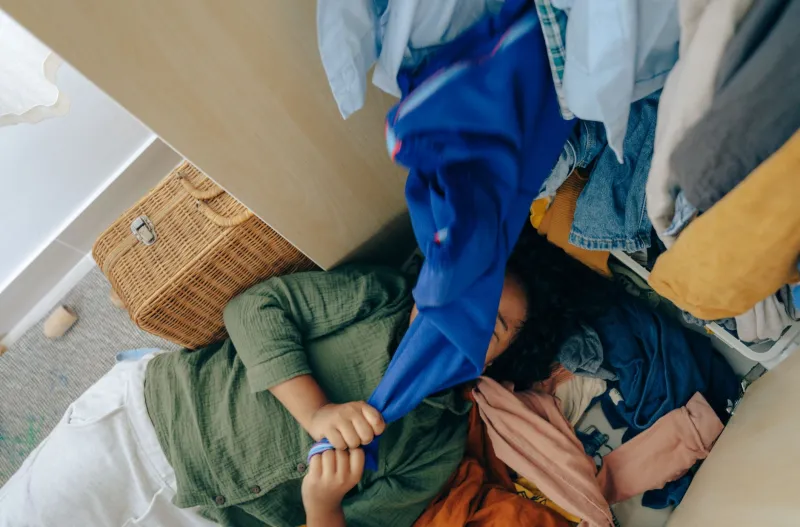
You know the pile. It lives on the chair, or shoved to the far left of the closet rod, or folded into a bin you haven't opened since two apartments ago. It's not the stuff you love. It's not the stuff you've already donated. It's the in-between — the maybe pile. The "I'll wear this when I lose ten pounds" dress. The blazer that was a mistake but cost $120 so it stays. The jeans from 2019 that technically still fit, just not the way they used to.
Here's the uncomfortable truth nobody really wants to sit with: that pile isn't passive. It's not just taking up space. It's actively messing with your budget, your decision-making, and your relationship with getting dressed every single morning.
Why We Hold On (Even When We Know Better)
The psychology here is pretty well-documented. Behavioral economists call it the sunk cost fallacy — the deeply human tendency to overvalue something simply because we've already spent money on it. Once you've dropped $80 on a top, your brain starts working overtime to justify keeping it, even when you've worn it exactly once and felt weird in it the entire time.
But fashion makes this even messier than, say, holding onto a bad stock. Clothes are personal. They're tied to versions of ourselves we wanted to be, events we imagined attending, aesthetics we were briefly obsessed with. That flowy boho dress you bought in 2021? You weren't just buying a dress. You were buying a whole lifestyle vision — the farmer's market mornings, the road trips, the effortlessly breezy version of you. Letting go of the dress means letting go of that story. And that's genuinely hard.
There's also what researchers sometimes call anticipated regret — the fear that the moment you donate something, you'll desperately need it. This is the "just in case" trap, and it is ruthless. We hold onto things for scenarios that have a roughly zero percent chance of materializing. The cocktail dress for a gala you've never been invited to. The ski pants for a trip you haven't planned. The formal heels that are killing your feet but "what if there's a wedding?"
Spoiler: there's always another wedding. You can figure it out then.
The Real Cost of 'Just In Case'
Here's where it gets financial. The maybe pile doesn't just sit there — it actively distorts how you shop.
When your closet is cluttered with things you don't actually wear, you lose visibility into what you genuinely need. You buy duplicates because you forgot you had something similar buried under the maybe pile. You spend money on new pieces to fill gaps that don't actually exist, because the piece that would fill them is right there — you just can't see it anymore. And perhaps most expensively, you keep shopping to fix the closet feeling, when the problem was never a lack of clothes to begin with.
A 2021 survey by OnePoll found that the average American woman owns 103 items of clothing but regularly wears only about 10% of her wardrobe. That's not a closet. That's a storage unit you're paying rent on — in square footage, in mental load, and in the constant low-grade guilt of seeing things you never reach for.
Meanwhile, that money is frozen. Clothes sitting unworn in your closet represent real dollars that could have stayed in your account, gone toward something you'd actually use, or been redirected toward the few pieces you'd genuinely love.
The Audit Nobody Wants to Do (But Needs To)
A real wardrobe audit isn't about following a minimalist checklist or channeling your inner Marie Kondo. It's about getting brutally honest with yourself using a few simple questions — and actually answering them.
1. Have I worn this in the last 12 months? Not "could I have worn it" or "did I almost wear it once." Did it leave the closet and go on your body? If the answer is no, that's data.
2. Does it fit the life I'm actually living right now? Not the life you had in 2018. Not the life you're planning to have someday. The life happening right now, with your current job, your current social calendar, your current body. A piece that belongs to a different chapter of your life isn't a treasure — it's a time capsule you're paying to store.
3. If I saw this in a store today, would I buy it at full price? This one cuts through the noise fast. If the answer is a hard no, the sunk cost of what you originally paid is irrelevant. The money is already spent. Keeping the item doesn't recover it.
4. What am I actually saving it for? Get specific. Name the event. Name the scenario. If you can't, that's your answer.
What to Do With the Honest Answers
Once you've sorted the maybes into actual yeses and honest nos, you've got options — and some of them can put money back in your pocket.
Sell it. Apps like Poshmark, Depop, and ThredUp have made resale genuinely accessible. Brands with resale value (think: Levi's, Lululemon, Free People, anything from a recognizable designer) can fetch real money. Even mid-range pieces move if they're in good condition.
Donate strategically. Goodwill is always an option, but local women's shelters, clothing drives, and organizations like Dress for Success take professional pieces and actually get them to people who need them. You get the tax write-off; someone else gets a second chance at a blazer that was never really working for you anyway.
Swap with friends. One person's maybe is another person's score. A clothing swap with your crew is free, social, and weirdly satisfying in a way that regular shopping isn't.
The Part Nobody Warns You About
Here's what actually surprises people when they finally do this: the emotional relief is immediate and kind of overwhelming. There's something about clearing out the clothes that represent who you were trying to be — and keeping only what actually reflects who you are — that makes getting dressed feel lighter. Less like a negotiation with your past self, more like just... getting dressed.
You stop spending money to fix a problem you never correctly diagnosed. You stop buying things to fill a void that was really just clutter. And slowly, your wardrobe starts to look like something you actually want to open every morning.
The maybe pile was never neutral. It was just quietly, patiently, keeping you stuck. Time to call it out.